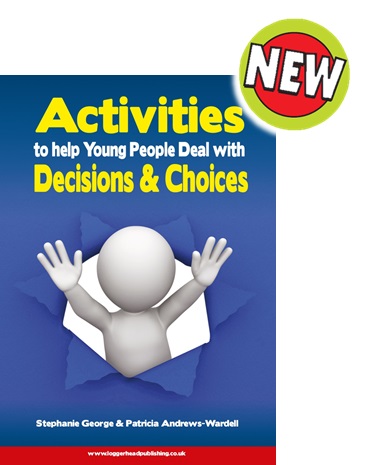
Activities to help
Young People Deal with Decisions & Choices
by Stephanie George &
Patricia Andrews-Wardell
|
A resource to support teachers and
pastoral staff to help students navigate the choices,
well-being and character development journeys that
they make each and every day
|
|
There are 20 Choices and
Decision-Making activities that cross the bridge between the pastoral
and curriculum aspects of learning. The activities can be used in PSHE
lessons, circle time, one-to-one sessions, small groups and mentoring
sessions and include:
- Decisions and
Choices Initial Self-Assessment – to
give students the opportunity to assess themselves in order to provide
a baseline for measuring progress with a focus on decision-making and
choices.
- Decisions and
Choices Action Plan – developing a
set of SMART targets and creation of a plan of action following
completion of the decisions and choices assessment.
- Choices at
16 – two follow-on
activities allowing students to understand the range of choices at the
end of Year 11.
|
|
 |
|
- Choices at
14 – for students
to consider the range of choices at the end of KS3.
- Sam and Poppy’s
Decision – a scenario on
peer pressure and friendships.
- It Wasn’t me,
Miss – to consider
the decisions to be made around a theft and who the culprit might be.
Students will examine the facts, make a judgement and make a choice.
- Mark’s Mobile
Phone – students are
asked to identify and recognise when it is appropriate to use a mobile
phone.
- Influences and
Decisions – exploration
of who has the most influence over the students.
- Friendship
Choices and Qualities –
examination of the actions and consequences regarding certain
situations with friends.
- The Skills
Search – to
give students the opportunity consider the skills set that they have,
if they can further develop them and the choices that they will need to
make to do this.
- The Qualities
Quest –
students reflect upon the qualities they have and consider how to
nurture and improve upon these as part of their own personal
development and character building.
There
is real pressure on our young people in modern society – from social
media, mobile phones, the Internet, friendships, peer groups, parents
to school demands – and pressure can come in many forms and affect many
areas of their lives. When pressure leads to poor choices and decisions
this can have undesirable consequences for young people who have so
much to manage and juggle at a time of intense physical and emotional
change. This book is about helping young people to make informed
choices and decisions.
It
is intended for use by those working in a variety of settings including
schools, alternative education settings, Learning Support Units,
Pupil/Student Referral Units, Isolation Units, Exclusion Rooms, youth
clubs, community groups and similar settings. The activities can be led
by teachers, student support workers, behaviour mentors, pastoral
assistants, learning mentors, isolation room leaders and special
educational needs staff. The FREE CD-Rom contains the
complete content of the book to allow easy printing of the instructions
for running the activities and the accompanying worksheets or they can
be photocopied. Includes a Student Feedback and Tracking Workbook to
print out or photocopy.
ISBN 978-1-909380-92-9 Ages 11-18 A4, 80 pages, photocopiable, FREE
CD-Rom
|
Activities to help Young
People Deal with Decisions & Choices
Ref
198-149a
£35.00
|
|
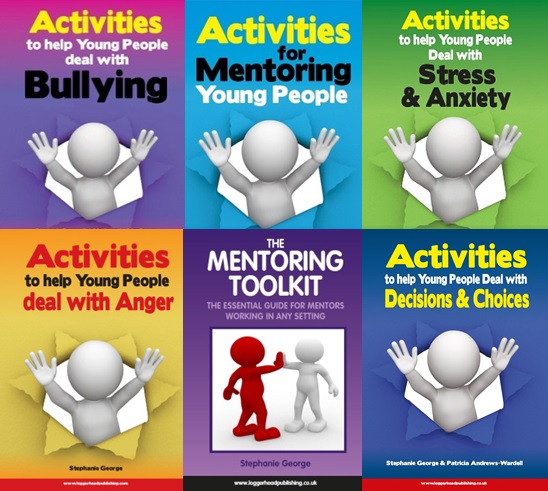
Also available:
Special Offer - All 6 Stephanie
George Books
Ref 205-149a
£199.50
|
 |
|
 |
|
About the Authors
Stephanie George
Stephanie George is a deputy head teacher based in
London. She is also a writer and her book The Learning
Mentor Manual,
is the leading educational textbook on Learning Mentor Practice in
England. Stephanie has worked with teams of Pastoral Leaders, Heads of
Year, Inclusion Teams and Learning Mentors in a variety of challenging
settings across the United Kingdom. She has been responsible for the
training and development of Learning Mentors since their inception.
Stephanie regularly runs courses and INSET on all aspects of mentoring
and intervention practice in educational settings throughout the UK and
has trained over 1,000 Learning Mentors. In 2013 Stephanie and her team
were awarded the Times Educational Supplement Award for Support Team of
the Year.
|
|
|
Patricia Andrews-Wardell
Patricia Andrews-Wardell
is an assistant head teacher based in London. She has over 25 years’
experience leading pastoral and curriculum teams to support the
achievements of young people. Patricia has brought her determination,
enthusiasm, coaching and motivational armour as an ex-international
athlete to the classroom, departments and schools that she has been
involved with over the past three decades. She has developed student
leadership systems that build young people’s personal development,
resilience, grit and character. Pat’s systems have been shared and
replicated in other schools locally and nationally. She has also been
awarded for her outstanding leadership steering Duke of Edinburgh
awards.
|
|
 |
|
|
|
|